
Jewelry identifier: identify any piece from a photo
Free preview on every photoYour photo is read once in memory and never stored. Only the written report is kept, and only when you unlock it.
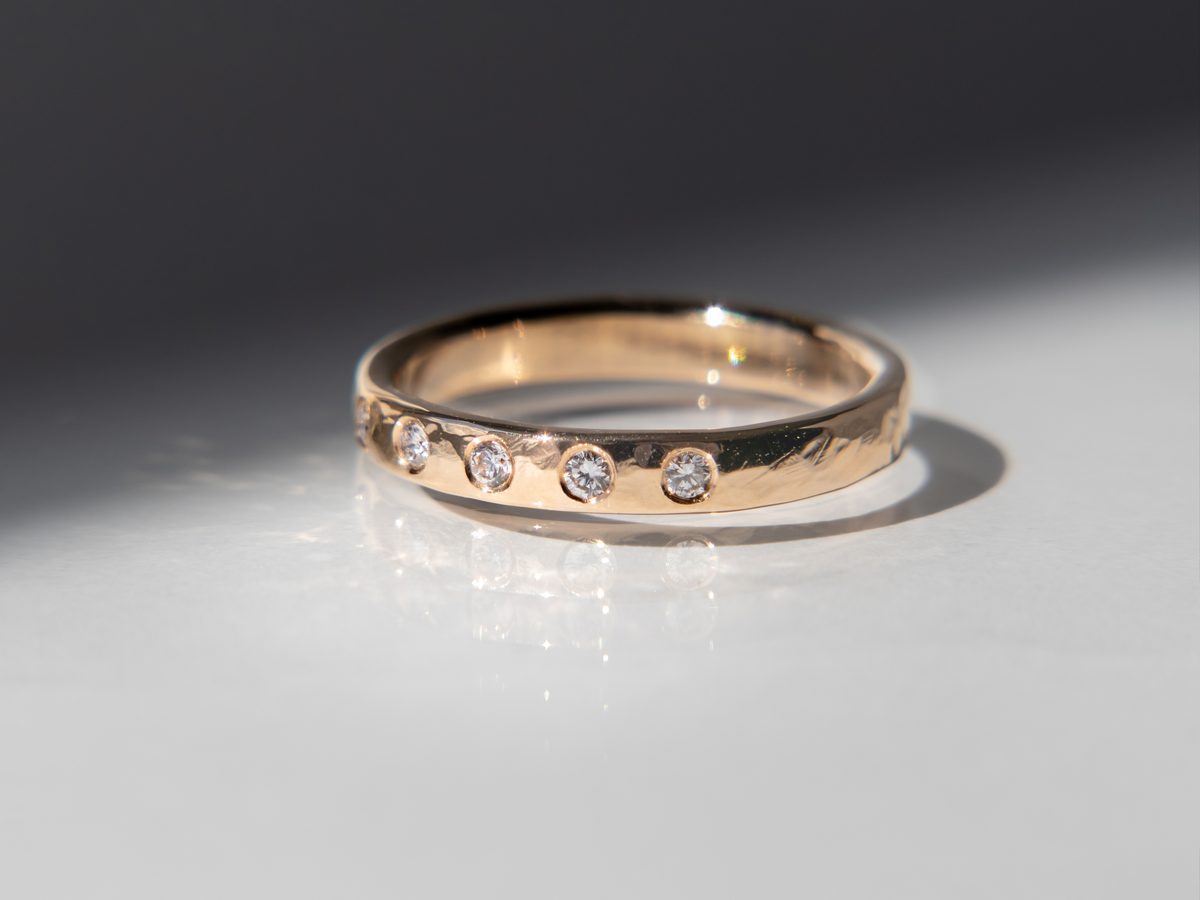
Upload one photo of one piece and read what is actually visible in it: object type and construction, material clues, any markings, a likely age and origin, an estimated value range with the basis for it, and the checks worth doing next. A careful first read from a photograph, not a professional appraisal.
What the report picks out of a photo
Drag the handle. Left is the photo as uploaded, right is what the report reads out of it.
Sample · marked for the demo, not an appraisal
Wide domed band with one dark set stone
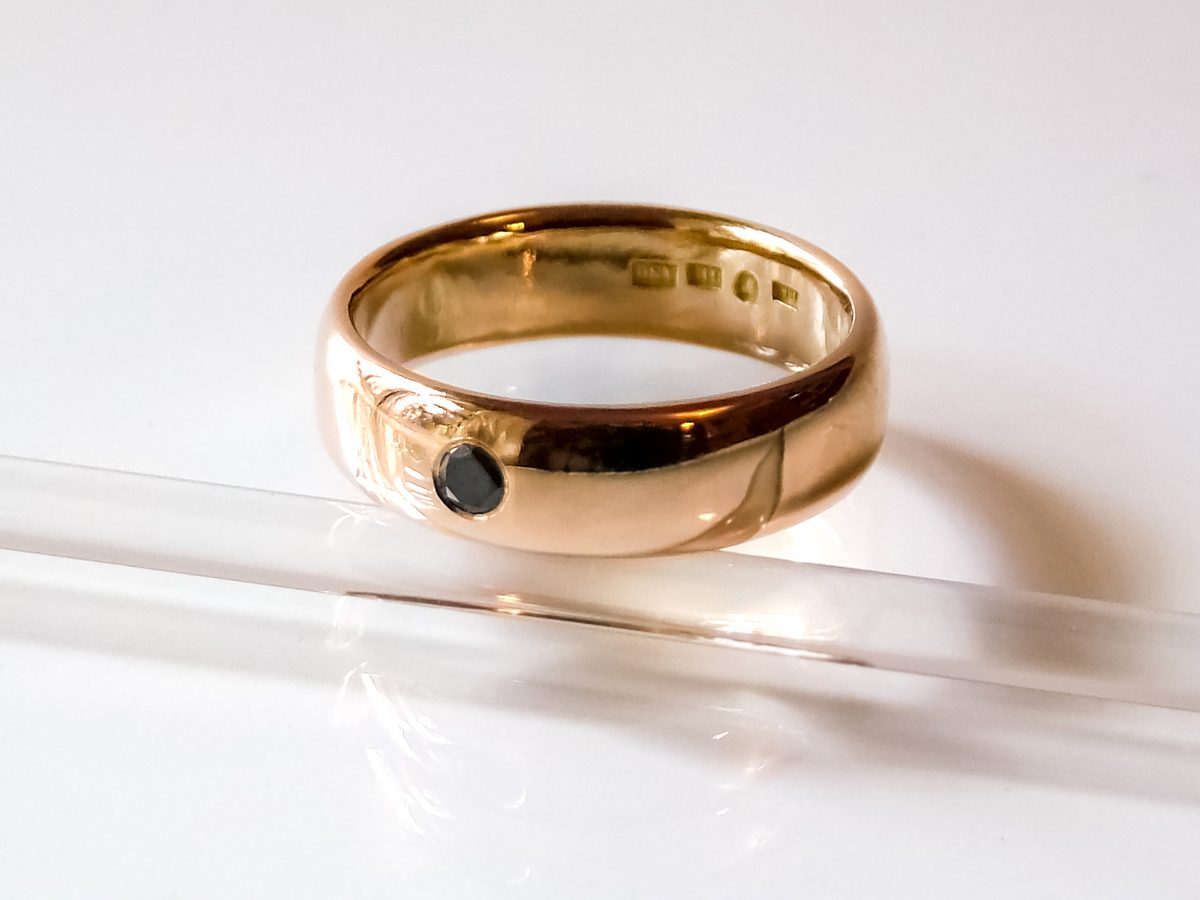
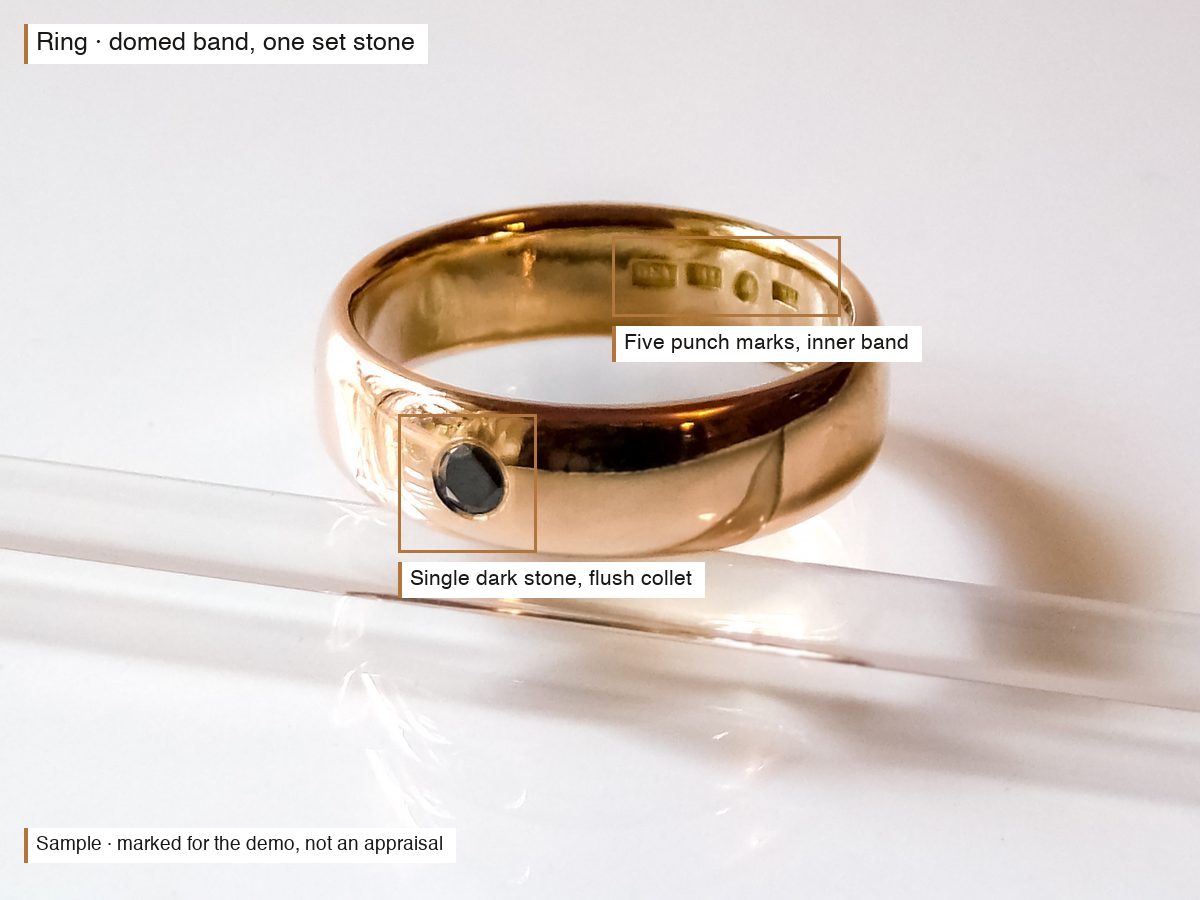
A single wide band in warm yellow metal, domed across its width and highly polished, carrying one small dark round stone set flush into the outer face and off-centre toward one shoulder. A row of five separate punch marks is visible inside the band; none of their characters can be resolved at this angle.
Based on: Rests on the warm metal colour, the unread five-punch mark row and the dark stone in light wear; a legible mark naming the metal and maker, or a confirmed stone, would move it.
About this estimate
An estimate from one photograph, not an appraisal. The metal and its mark, the stone, the maker and the condition all move it — confirm before you rely on it.
- Identification certainty74%
- Construction read66%
One ring in the frame, resting on a clear acrylic rod against a plain white background. The band is wide and of even width all the way round, with a domed outer profile — a D-section — and no taper at the shoulders.
More detail
A single small round stone, very dark to black, sits flush with the metal in a plain rubover collet: the metal is pushed over the girdle of the stone rather than held in claws, so the stone does not stand above the surface. The collet is set off-centre, closer to one side of the band than the other, which is a deliberate placement rather than damage.
The most likely reading is a plain wide band with a single flush-set accent stone. A claw or channel setting, or a second stone on the far side out of frame, would change that; the far half of the band is not visible.
- Object type
- Ring, wide band with one set stone
- Pieces in frame
- One
- Setting
- Flush rubover collet, stone level with the surface
- Chain or band
- Wide D-section band, even width, no taper
- Stone count
- One visible; the far side of the band is out of frame
- Metal colour
- Warm yellow with a reddish cast in the reflections
Most likely identification
- Wide plain band with one flush-set dark stone74%
Even D-section band, rubover collet, single opaque stone level with the surface.
- Marked piece in a solid precious metal50%
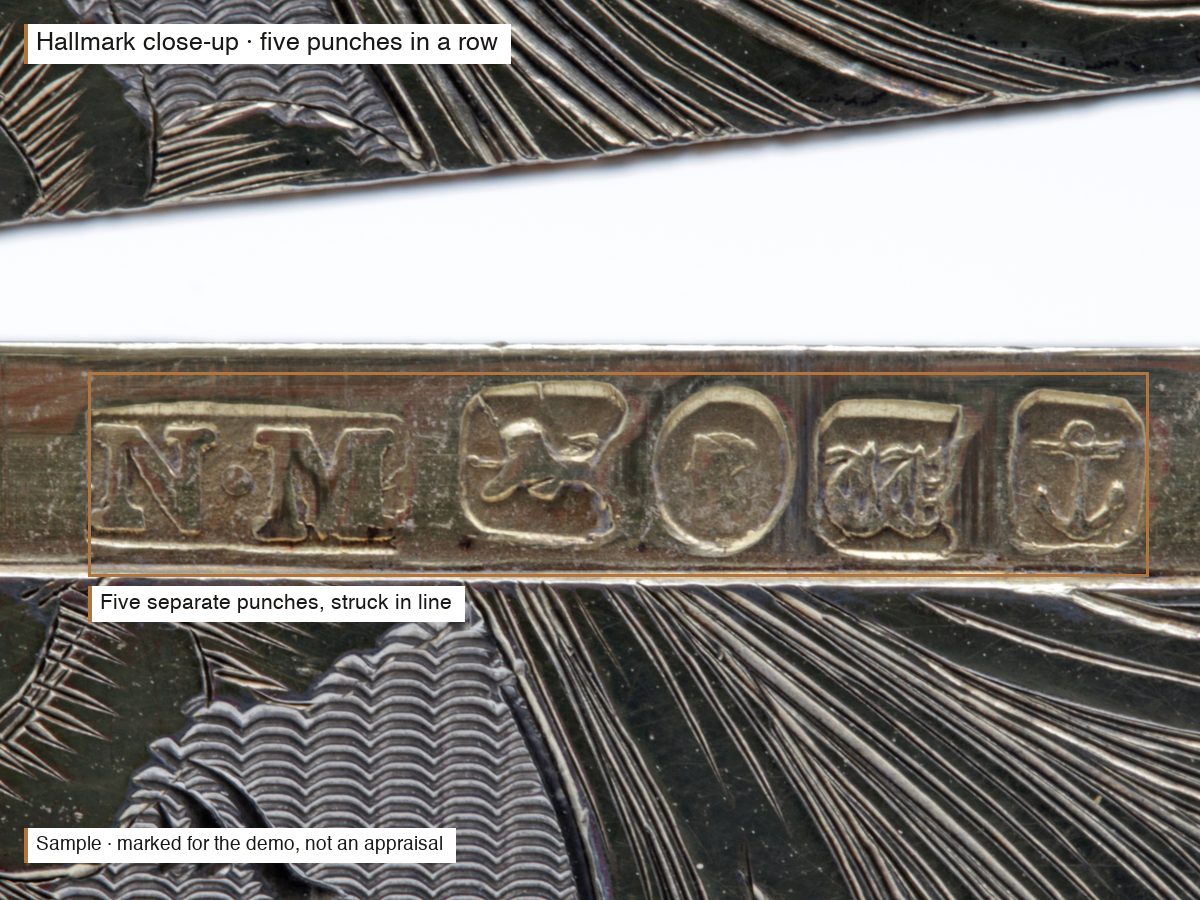
A five-punch row is the layout used on marked work, but no character is readable here.
- Plated or filled band of the same form22%
No plating break is visible at the edges, which argues against it without settling it.
What it could be instead
- Band with several stones set around it12%
Only one collet is in frame; the far side is not shown.
- Signet or engraved band4%
The outer face is plain and carries a stone rather than an engraved face.
Observation and interpretation, kept apart
Every report starts with what is genuinely visible in the frame — object type, construction, fastenings, metal colour, stone count — and only then says what that is likely to mean. The likely part carries a confidence number and the alternatives that were considered and set aside, so you can see how much of the answer the photo actually supports.
Markings read as they are, never completed
If a stamp is visible, the report transcribes what can be resolved, describes the punch outline and where it sits, and says which reading a closer photo would settle. If a character is unreadable it stays unreadable. A mark that is not in the frame is never guessed at from the look of the metal.
A value range, with its basis in the open
The report gives a low and a high, one sentence saying what the range rests on, and a confidence for the estimate itself — never a single figure sold as fact. It names what would move it: the metal and its mark, the stone, the maker, the condition, the market. When the photograph gives too little, the range stays wide and the confidence low rather than guessing narrow.
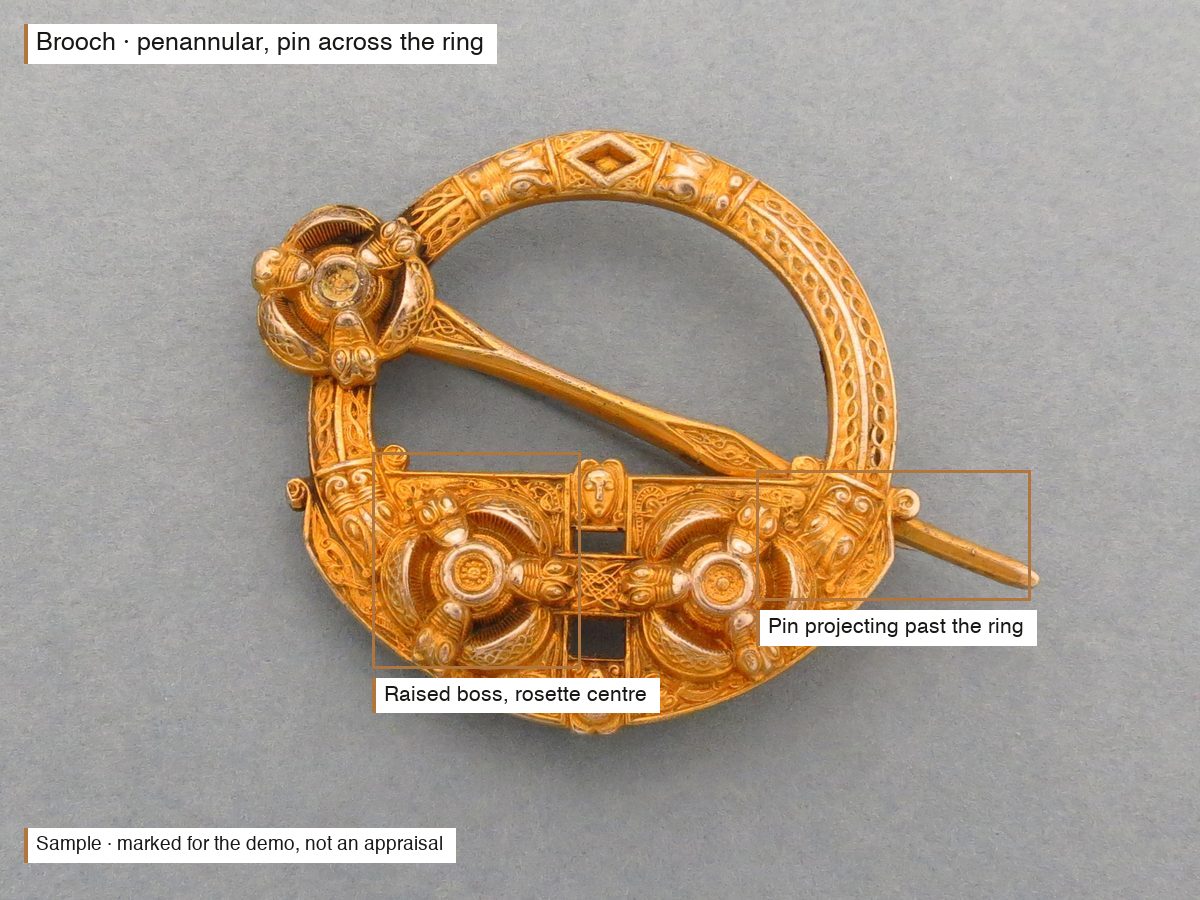
From your photo to the report
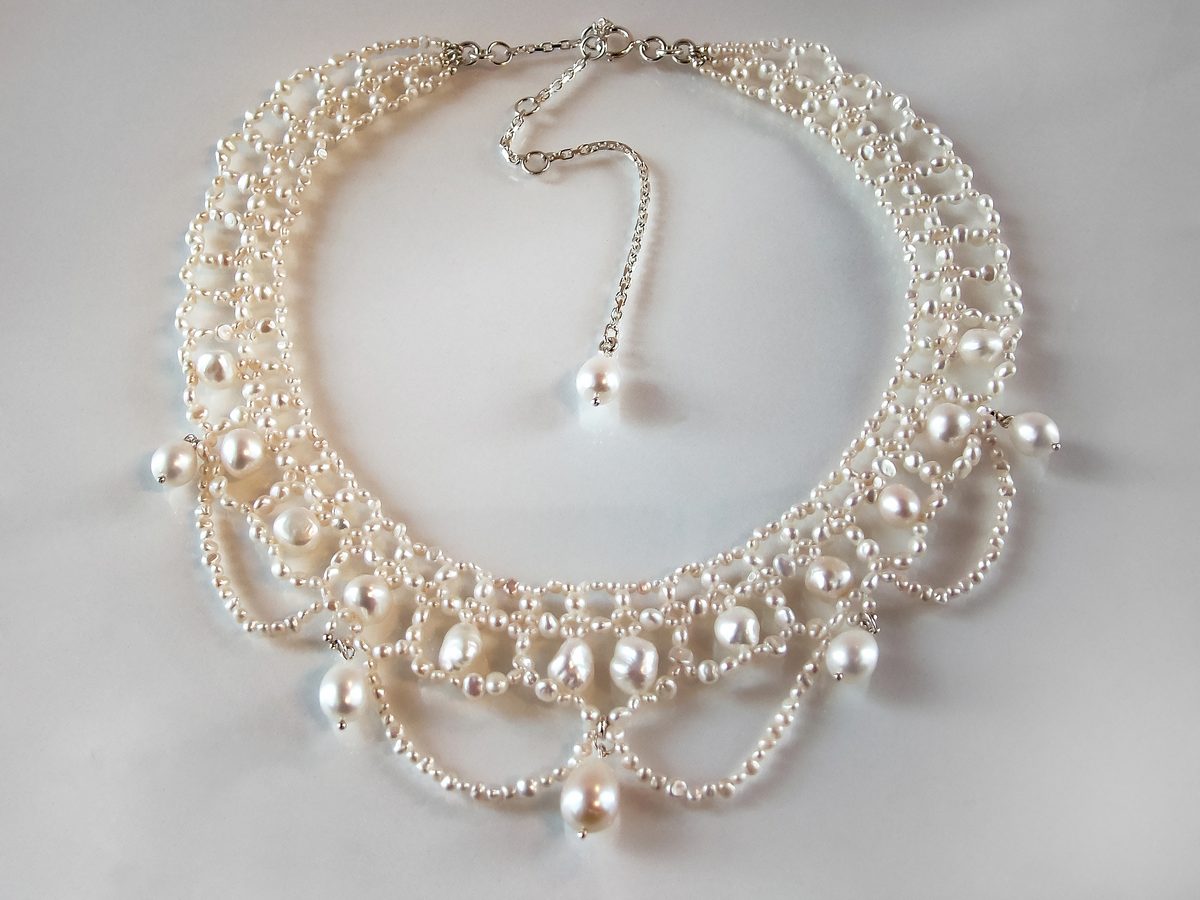
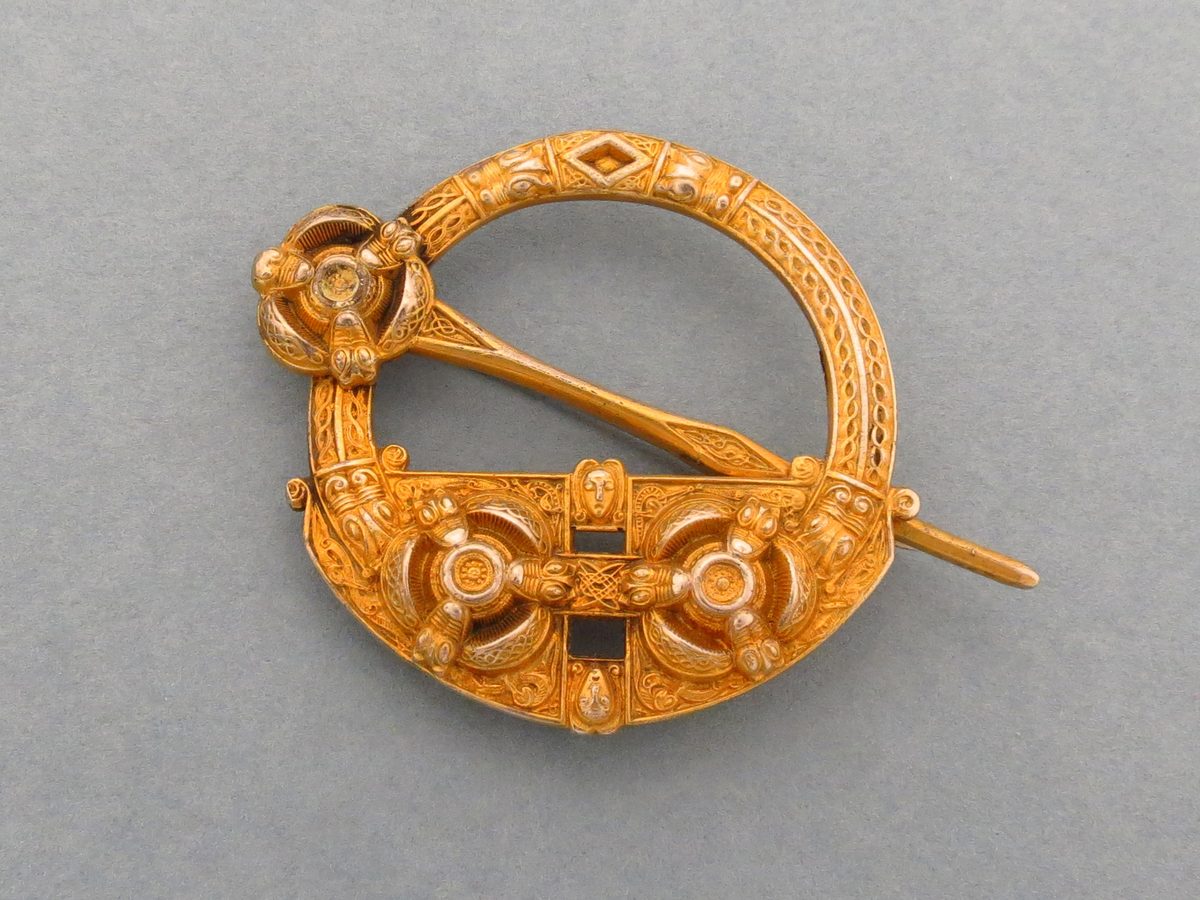 Full report
Wide domed band with one dark set stone
- Object typeRing, wide band with one set stone
- Pieces in frameOne
- SettingFlush rubover collet, stone level with the surface
- Chain or bandWide D-section band, even width, no taper
One photo, one report
The whole run, in three screens: the photo goes in, it is read once, and the free preview comes back on the same page.
- Checking the photo
- Reading the piece
- Writing the report
- Wide plain band with one flush-set dark stone74%
- Marked piece in a solid precious metal50%
- Plated or filled band of the same form22%
Identify your piece
Free preview in seconds. The full report unlocks with one analysis credit.
Your photo is read once in memory and never stored. Only the written report is kept, and only when you unlock it.
Valuation & Identification Guides
Explore our comprehensive guides on jewelry value estimation, professional appraisals, maker's marks, and gemstone optical checks.
Jewelry Value Estimator →
Calculate estimated secondary market value, precious metal scrap baselines, and antique collector premiums from your photo.
Jewelry Appraisal Guide →
Understand appraisal costs ($75–$200/hr), insurance replacement schedules, and how to find accredited appraisers near you.
Identification Guide →
Step-by-step methodology to examine mountings, findings, clasps, pin stems, and visible construction features.
Jewelry Stones Guide →
Optical examination tips to distinguish natural diamonds and fine gemstones from lab-grown synthetics and glass paste.
Questions
Is there an app that can identify jewelry?
Yes. Jewelry Identifier functions as an instant web app in your mobile or desktop browser without requiring any app store download. You simply snap or upload a photo of any ring, necklace, earring, brooch, or hallmark to receive a comprehensive identification report and estimated value range.
Can I identify jewelry by picture online for free?
Yes. Every photo uploaded receives an immediate free preview showing the complete identification analysis: object type, visible construction, stone settings, optical materials, photo quality score, and the specific limits of the reading before deciding to unlock the full forensic report.
Is this an appraisal or a certificate?
No. It is an estimate from one photograph, and the report says so beside the number. It gives a value range with its basis and its own confidence — not a guaranteed price, an insurance figure or an offer — and it cannot certify authenticity or date a piece to a year. Composition, authenticity and an exact value all need the piece in hand: a jeweller, a gemmologist, an assay office or an independent appraiser. The report tells you which to ask and what to show them.
What can it actually tell me from a photo?
Object type and construction, the fastening or setting, metal colour and surface wear, how the stones read optically, whether a mark is present and what can be resolved of it, and which style families the design belongs to. Each of those comes with what it is consistent with, what else looks the same, and how sure the reading is.
Can it identify a hallmark or maker mark?
It transcribes what is legible in the photo, describes the punch shape and where it sits, and explains what kinds of mark that shape belongs to. It will not complete a mark it cannot see. A sharp, close, well-lit shot of the stamp is worth more than any other photo you can send.
Which pieces work?
Rings, necklaces, bracelets, earrings, brooches, pendants and pins, modern or vintage, as well as close-ups of a mark on any of them. One piece per photo: several pieces in one frame means one of them gets the report and the rest get a line in the caveats.
What happens to my photo?
It is held in memory for the single request that reads it and is never written to disk or storage. Only the written report is kept, and only when you unlock it. Report pages are private to whoever holds the link and are excluded from search engines.
How accurate is an online jewelry identifier?
Every report carries a confidence score, a judgement of how usable the photograph was, and a list of what a photograph cannot settle. Treat it as a well-informed first read that tells you where to look, not as a verdict.