
How to Identify Jewelry Stones: Diamonds, Gemstones, Glass & Lab Grown
How to identify jewelry stones from mountings, optical clues, and inclusions: diamonds vs cubic zirconia, natural vs synthetic gems, and glass paste.
· Jewelry Identifier
Identifying stones set in jewelry is one of the most challenging visual tasks in gemmology. When a stone is mounted in a ring or pendant, its pavilion is often obscured, specific gravity cannot be measured, and refractometer contact is difficult.
Yet, close visual examination reveals crucial optical clues. Whether you are examining an inherited family ring or a flea market find, here is how to identify jewelry stones systematically and separate valuable natural gems from glass, paste, and lab simulants.
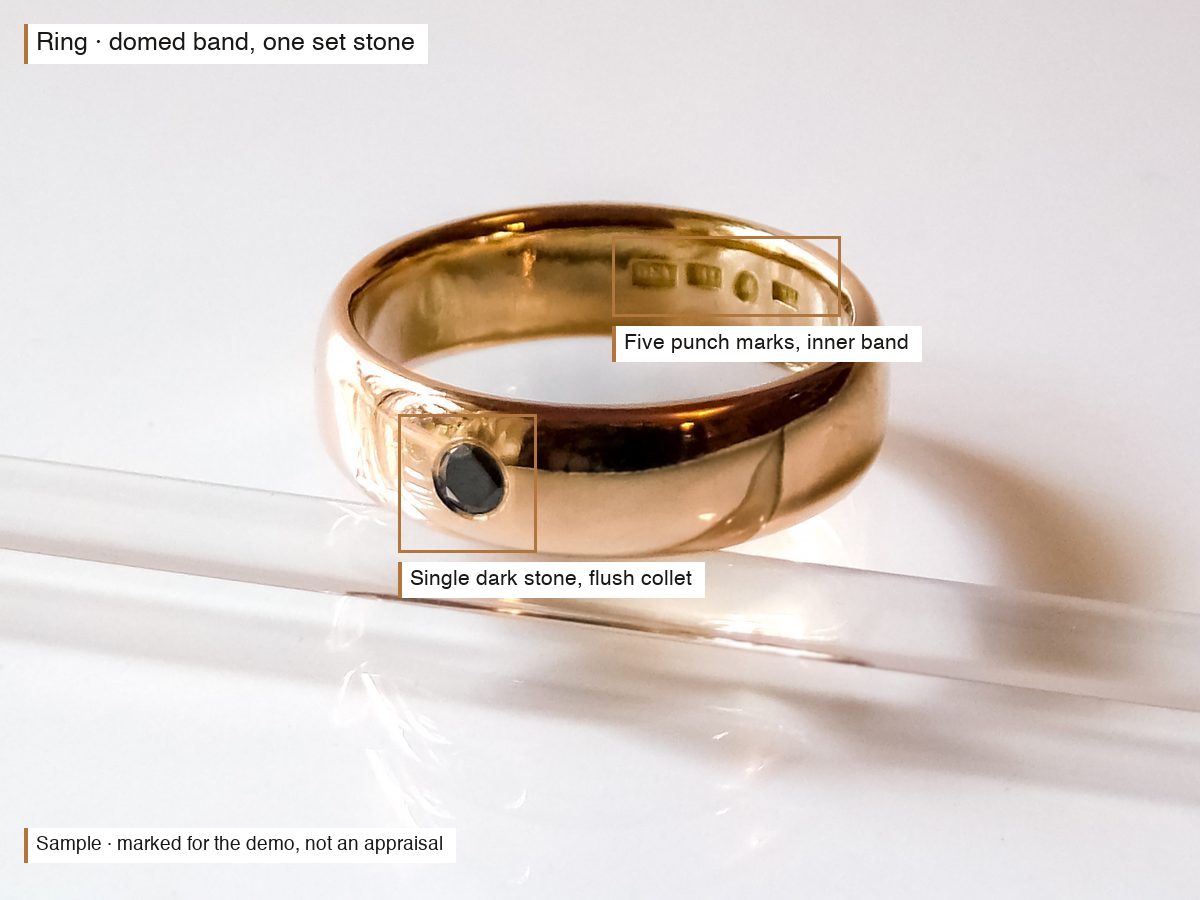
If you have a clear photo of your piece, you can also run it through the jewelry identifier to inspect the visible stone settings, mounting construction, and metal clues.
1. Setting and mounting clues: The first giveaway
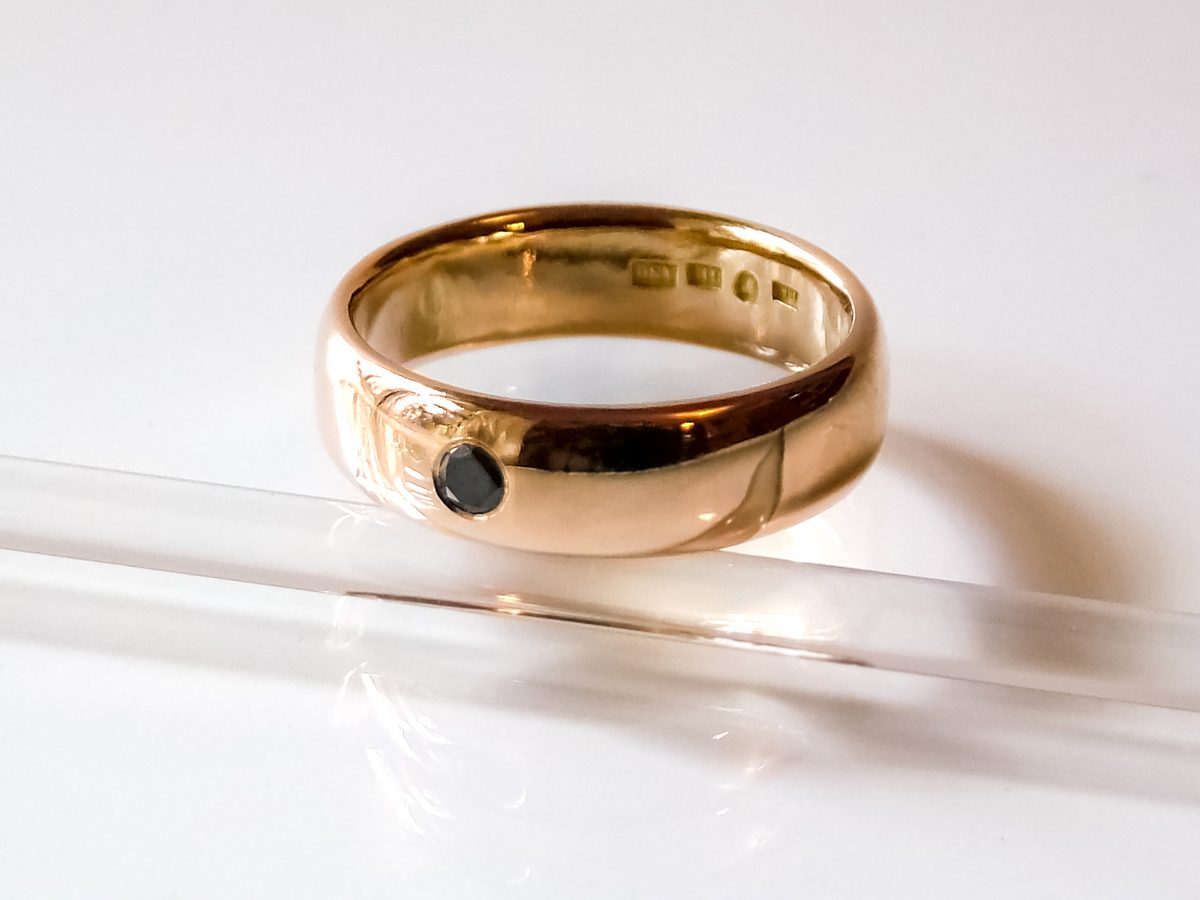
Before looking at the stone itself, look at the metal holding it:
- Open vs. closed-back settings: Fine gems are almost always set in open-back mountings so light can enter the pavilion and dirt can be cleaned out. If the back of the setting is enclosed with a solid metal plate, foil-backed paste (glass) or quartz was frequently used to artificially boost sparkle in Victorian and Georgian costume jewelry.
- Metal quality: Jewelers rarely set high-grade natural diamonds or fine untreated sapphires into brass, copper, or base metal. Look for gold (14K, 18K), platinum (950), or sterling silver (925) hallmarks. Base metal almost always means glass, rhinestone, or synthetic crystal. To check the metal itself, see is my jewelry real?
- Prong workmanship: Fine stones are secured with individually shaped prongs, bezels, or bead settings. Glued-in stones (where no metal prongs mechanically hold the girdle) are costume rhinestones or glass foilbacks.
2. Inspecting facet junctions and surface wear
Under a 10x jeweler’s loupe or a high-resolution phone macro shot, examine the edges where the facets meet (the facet junctions):
- Glass, paste, and rhinestones: Glass is soft (Mohs hardness ~5.5). Over time, facet junctions become rounded, scratched, and abraded. You may also observe tiny chips called “conchoidal fractures” along the girdle.
- Cubic Zirconia (CZ): While hard (~8.5), CZ facet junctions often appear slightly rounded under high magnification compared to genuine diamonds, and CZ exhibits noticeable excessive rainbow dispersion (“fire”).
- Diamonds & Hard Gemstones: Diamond is the hardest known natural substance (Mohs 10); sapphire and ruby are corundum (Mohs 9). Their facet junctions remain razor-sharp, crisp, and unworn even after decades of daily wear.
3. Natural gemstones vs. synthetic and lab-grown stones
Understanding stone origin is essential for valuation:
- Natural gems: Grown underground over millions of years under erratic heat and pressure. They usually contain natural microscopic inclusions: crystals, “silk” (rutile needles), two-phase liquid/gas bubbles, or subtle color zoning bands.
- Flame-fusion synthetics (Verneuil process): Used since the early 1900s for synthetic rubies and sapphires. Under magnification, they display curved striae (growth lines) and gas bubbles, unlike the straight angular hexagonal zoning of natural corundum.
- Lab-grown diamonds (CVD / HPHT): Lab diamonds share the exact same chemical, physical, and optical properties as mined diamonds. A photograph or standard 10x loupe cannot reliably distinguish a lab-grown diamond from a natural mined diamond. Only specialized gemmological spectroscopy machines measuring photoluminescence and UV fluorescence patterns can certify diamond growth origin.
4. Optical tests you can perform at home
While instruments are needed for certified grading, several simple optical observations provide strong initial clues:
- The Fog Test (for unmounted or clean diamonds): Breathe warm air onto the stone like fogging a mirror. Diamond has exceptionally high thermal conductivity, so the fog condenses and evaporates almost instantly (under 1 second). Glass, quartz, and cubic zirconia retain condensation for 2 to 4 seconds.
- Double Refraction (Doubling): Look straight through the table facet at the culet lines on the back. Stones like moissanite and zircon are strongly doubly refractive; facet lines appear doubled. Diamonds and spinels are singly refractive; facet lines always stay sharp and single.
- UV Blacklight Check: Many natural diamonds fluoresce blue under long-wave ultraviolet light. Synthetic moissanite or CZ rarely fluoresces the same chalky blue.
5. What a photograph can and cannot prove about stones
When uploading a photo to an online jewelry identifier:
- What the photo supports: Stone cut classification (round brilliant, old European, cushion, emerald cut, cabochon), optical color and transparency, setting style (prong, bezel, pavé, channel), and whether wear patterns suggest glass or crystal.
- What no photo can verify: Carat weight (requires millimeter calipers or carat scale), natural vs. lab-grown status, heat or chemical treatments, and exact diamond color/clarity grades on the GIA scale.
What to do next
If your visual inspection suggests an authentic gemstone or diamond of significant size, take the piece to an independent Graduate Gemmologist (GIA GG) or an assay laboratory. Learn more about professional fees and certifications in our Jewelry Appraisal Guide or estimate your piece’s overall market potential with the Jewelry Value Estimator.
To explore the overall examination process from mounting to marks, learn how to identify jewelry by picture or how to identify jewelry maker’s marks and hallmarks.